Showing posts with label Reviewed by Suzanne. Show all posts

October 12, 2009

Magical Thinking: True Stories Augusten Burroughs


This was an awkward read for me. Augusten's life is so different from mine; his meanness disturbed me. I didn't like it in the same way that I didn't like Wally Lamb's She's Come Undone, which is probably my most-hated book ever.

The difference is that Wally Lamb's books was fiction, and Augusten Burroughs book is not. So, whether I like it or not, Burroughs lives his life and has the courage to put it into print, and I have to grant some credit for that.

Yes, Magical Thinking: True Stories is funny. Yes, it was intriguing. I felt a bit like a tourist reading it. Much in the same way that I was an embarrassed sojourner whilst reading certain parts of Jeffrey Eugenides Middlesex or whist walking around Amsterdam's sadly fascinating red-light district. Augusten's life is sordid and mean and he doesn't seem to notice. I felt sad after reading his book.

I recently received a copy of Oliver Van DeMille's A Thomas Jefferson Education: Teaching a Generation of Leaders for the Twenty-first Century. I will review the whole book later, but for know I want to share with you the four classifications of stories: bent, broken, whole, and healing.
A. Bent stories portray evil as good and good as evil. Such stories are meant to enhance the evil tendencies of the reader, such as pornography and many horror books and movies. The best decision regarding Bent stories is to avoid them like the plague.
B. Broken stories portray accurately evil as evil and good as good, but evil wins. Something is broken, not right, in need of fixing. Such books are not uplifting (in the common sense of the word), but can be transformation in a positive way. Broken stories can be very good for the reader if they motivate him or her to heal them, to fix them. The Communist Manifesto is a broken classic; so are and The Lord of the Flies and 1984, In each of these, evil wins; but they have been very motivating to me because I have felt a real need to help reverse their impact in the real word.
C. Whole stories are where good is good and good wins. Most of the classics are in this category, and readers should spend most of their time in such works.
D. Healing stories can be either Whole or Broken stories where the reader is profoundly moved, changed, or significantly improved by her reading experience.
Magical Thinking: True Stories? Broken.

~Suzanne

September 28, 2009

Digging to America

Anne Tyler's Digging to America is a story that appears to be about two families that adopted from Korea, but is, in fact the story of one of the Grandmothers as she grapples with her "otherness". She immigrated from Iran.
"Oh," she said, " sometimes I get so tired of being foreign I want to lie down and die. It's a lot of work, bring foreign."
The two families strive to be friends, though they annoy one another and privately criticize each other's ways. For me, this makes the novel hard to buy into, as I can't imagine these as real people who call this a real friendship. Why bother trying to be friends with people you don't actually like?
It wasn't just age that made the difference (although that helped, no doubt); it was more that she had winnowed out the people she wasn't at ease with. [ . . . ] "Why should I bother? This is one good thing about getting old: I know what I like and what I don't like."
Why wait until we are old?

All-in-all, it was a good book, but not a great book.

~Suzanne

September 14, 2009

Case Histories by Kate Atkinson

I really enjoyed this novel: Case Histories from Kate Atkinson. It features a new (to me) character: a private detective named Jackson who is presented with three long-cold mysteries. Gradually all three are unraveled and even share a few story-threads in common.


I find it remarkable that in both of the Atkinson novels I have read, this and Behind the Scenes at the Museum, Atkinson heavily invests in the complications -- the desperate affection and rivalry -- of sisterly relationships. And, in each novel one sister has had a hand in a death and an other sister takes the blame.

I would so very much like to read an interview with an Atkinson sibling, but it appears that I cannot as wee bit of internet research seems to show that she is an only child, which really disrupts my theory of writing as PTSD therapy. I suppose that is a compliment to Atkinson, that she could concoct such complex relationship drawing not-at-all upon personal experience.

Behind the Scenes at the Museum has a complicated, and often confusing, pattern of narration; Case Histories does not. It reads easily and hooked me early on. The mysteries are well-crafted in that I thought I knew who did what to whom, but I was wrong. And once again I am struck by how well Atkinson writes the internal dialogue of the very young.

~Suzanne

August 31, 2009

Wide Sargasso Sea by Jean Rhys


Wide Sargasso Sea: A Novel by Jean Rhys is a lovely tale all on its own though it also serves as a prequel to Bronte's Jane Eyre.

Rhys relays the story of the first Mrs. Rochester, poor Antoinette, married off by a step-brother to a cold-hearted man who gladly assumes ownership of her wealth and her heart, caring only for the former and breaking the latter before moving her away from her sunny Jamaica to dreary England. By the time she sets fire to the mansion, you'll be rooting for her; I was.

~Suzanne

Technorati

August 17, 2009

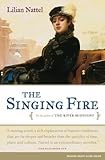
The Singing Fire by Lillian Nattel


The Singing Fire: A Novel by Lillian Nattel: I had very much enjoyed her first novel, The River Midnight but this one didn't grab me.

Set in the Yiddish ghetto of Victorian London, the novel traces the lives of two immigrant women, both victims of oppressive male dominance, sometimes in the form of a friendship-feigning pimp, sometimes in the form of a cruel step-father, or the usurious tutor. Children are conceived, miscarried, abandoned, claimed and cherished. One woman escapes the ghetto into a cold marriage, one escapes a cold marriage, but not the ghetto.

Nattel carefully draws the setting and details it richly. I may have read too much Anne Perry to fully appreciate the care with which Nattel presents Victorian-era poverty. Or perhaps I am weary of the 'most men are bad' theme. Nattel is a good author and I am disposed to like her work, this one just didn't do it for me.

Have you read it? What do you think?


~Suzanne

Technorati

August 3, 2009

Night of Flames by Douglas W. Jacobson

The nice folks at Library Thing helped me get an advance reading copy of this fine World War II historical fiction: Night of Flames: A Novel of World War II. This is a plot-driven tale, not a character-driven one, so if you are longing for carefully crafted and embellished characters this is not your book. But, if you enjoy taking your dose of history nicely wrapped in a story, this is an excellent choice.


Jacobson's tale follows a husband and wife through Germany's occupation of Poland. The husband is an officer in the Polish cavalry; the wife gets drawn into the Polish resistance. The readers get an intimate view of the lives of ordinary people forced into extraordinary situations.

It is well-researched and detailed, without becoming tiresomely weighted down with historical facts and figures. The pace is brisk -- it was hard to put down -- and the ending was very satisfying (if not a wee bit predictable).
~Suzanne
Technorati

July 6, 2009

Blindness by Jose Saramago


Blindness by Jose Saramago: interesting but I'm not sure if I liked it. It's an ugly story, well-told. Citizens of a modern city are suddenly afflicted with blindness, not just a few of them, but most of them. Quickly all the trappings of civilization are shed as the nameless citizens kill, rape, and misuse one another. Saramago narrates all this without benefit of quote marks, indentation, or other normal paragraphing, giving it all a breathless rushed feeling, as if he has to get the story out before either he or I are also struck with the white blindness.

Of course, Saramago is telling a bigger story, one in which we are reminded that we are one disaster away from savagery. As I said, it was interesting, but I'm not sure if I liked it.

~Suzanne

Technorati

June 22, 2009

The Nanny Diaries by Emma McLaughlin and Nicola Kraus

Oh yes, this was unmitigated fluff, though I did enjoy it.

The Nanny Diaries describes the experience of a nanny working for an family in New York.
My question is, are there really people who live such materially-rich and relationally-shallow lifestyles? They probably feel sorry for me in my rural domestic life, and I feel sorry for them in their friendless marriages.

I would count this as beach reading, and as such, it is a good one. Entertaining and not sullied by gratuitous sex.
~Suzanne

June 8, 2009

Behind the Scenes at the Museum by Kate Atkinson

Kate Atkinson's Behind the Scenes at the Museum is a real treat. The book opens in 1951 with the conception of the Rose Lennox, narrated by Rose herself (from an insider's perspective, of course). The wee little one-celled, oopps, two-celled person, oopps, four-celled now, has all the vocabulary and literary references of a grown-up. It is a quirky and highly engaging narrative voice and I loved it.

Interspersed with Rose's voice are footnotes that tell the backstories of the extended family. Boys go off to war, girls get pregnant, families squabble, people die, small children too. There is sadness and relief, amusement, mystery, and ordinary detail of ordinary people. The pleasure of the book is Atkinson's entertaining voice and her ability to recall and relate what it was to be small. She nailed me with this passage:

I am sent to bed first and have to negotiate this trecherous journey entirely on my own. This is manifestly wrong. I have adopted certain strategies to help us in this ordeal. It's important, for example, that I keep my hand on the banister rail at all times when climbing the stairs (the other one is being clutched by Teddy). That way, nothing can hurtle unexpectedly down the stairs and knock us flying into the Outer Darkness. And we must never look back. Never, not even when we can feel the hot breath of the wolves on the backs of our necks, not when we can hear their long, uncut claws scrabbling on the wood at either edge of the stair-carpet and the growls bubbling deep in their throats.

I felt the same way as a child, though I was much less eloquent about it. I'll be adding Kate Atkinson's other books to my To Read pile.


~Suzanne

May 25, 2009

May 11, 2009

Lottery

It is such a treat to find a great book! I found this at the library last week and really enjoyed it. Set in Everett, Washington, it is the story of a not-retarded man who wins the lottery. One's IQ has to be 75 or below to be retarded, and his is 76, hence the not-retarded label. It is a dear story of friendship and loss and love. If you enjoyed The Curious Incident of the Dog in the Night-Time you are likely to enjoy Lottery by Patricia Wood as well.


~Suzanne

April 27, 2009

So Brave, Young & Handsome by Leif Enger

This is Leif Enger's second book. His first, Peace Like a River, would be a hard act to follow as it was a practically perfect book. I enjoyed So Brave, Young and Handsome: A Novel, but I didn't love it.


Monte Beckett is a one-shot author. He wrote one best-selling book, quit his day-job at the post office and then flailed about. He is the sort of man I do not like, a man who lets life circumstances form his choices, as opposed to making choices that form his life circumstances. Fortunately for him, he married a woman not like me at all.

The book opens with Monte notices a man floating past him on the river. Though not immediately, Monte joins the man on his venture. His new companion is an outlaw, trying to go make amends with an abandoned wife before the law catches up with him.

Twas a good, though not great, read. I'd recommend putting it on hold at the library rather than running into town to purchase it. I'm sorry Mr. Enger. I loved Peace Like a River so much that I feel sad to not be able to rave over this one.

~Suzanne

Related Posts Plugin for WordPress, Blogger...