Showing posts with label Non-Fiction. Show all posts

May 21, 2012

The Power of Habit by Charles Duhigg

I am a self-help junkie. I love to read books that promise they can change my life if I just follow a few easy steps. So I'll admit I originally agreed to read The Power of Habit because I thought it was another self-help book that could make me become a better person. It wasn't. It was even better.

The Power of Habit is a book written about the science behind habits - what habits are, why they exist, and how they can changed. It talks not only about habits in individuals but also about habits in successful organizations and how organizations use the science of habits to be more successful. Do you ever wonder how Target can send you coupons for the exact thing you need at the store or why you find yourself drawn to the Cinnabon counter in a mall? This book explains those ideas and best of all, it explains how you can change habits.

Has this book changed my life? No. Could it? Yes, I do believe it could if I followed the principles laid out so simply in the book. Regardless of if you want to change habits in your own life, this book is definitely worth reading. It was fascinating to learn about the science of habits and how I can drive myself home when I couldn't give someone directions to my apartment to save my life. This book was filled with so many incredible insights and I highly recommend it to anyone. 5 stars.

post signature

March 6, 2012

Giveaway: Defying Gravity by Carol de Giere

Amazon does a good job giving a brief synopsis of the book. Defying Gravity takes readers into the creative world of Broadway and film composer Stephen Schwartz, from writing Godspell's score at age 23 through the making of the megahit Wicked. For this first authorized biography, Carol de Giere draws from 80 hours of interviews with Schwartz and over 100 interviews with his colleagues, friends, and family. Her sympathetic yet frank narrative reveals never-before-told stories and explores both Schwartz's phenomenal hits and expensive flops. The book also includes a series of “Creativity Notes” with insights about artistic life, and more than 200 photographs and illustrations.

I love musicals and Wicked is one of my favorites. I'll admit that I quickly skipped through the first half of the book to get to the section on the making of Wicked so this review is based on the sections on Wicked. And if the other sections of the book are as good as the section on Wicked, I'll definitely be returning to read those skipped sections. When I first received Defying Gravity in the mail I began to regret agreeing to review it because well, it looks like a textbook and with the index it is over 500 pages long. But I'm glad I did because honestly while it looks like a textbook, it reads nothing like one and the word that comes to mind to describe it is fantastical. 


Defying Gravity takes you not only into the inner workings of Wicked but into the inner workings of how any musical is put together. There's a new TV show called Smash that does the same thing and I just think it's fascinating. Carol describes in very easy to read and understand prose the entire journey of Wicked from its conception during a trip Stephen took to Hawaii, to drafting the music and book, to casting the incredible Kristin Chenoweth and Idina Menzel as the best friends, to writing and rewriting, and finally to opening night on Broadway. I've seen Wicked five times now (including with the original cast) and know all of the music by heart so it was incredible for me to read where Stephen started with the original concept and how the team together made it into the incredible piece of art it is now. 


If you like Wicked or musicals in general this is a book you want to read. It's an easy but fascinating read and really gives you insight into Wicked and the musical creation process like no other book I've read. 5 stars. 


Want to read a copy? Well you're in luck because today is actually Stephen Schwartz's birthday (happy birthday!) and in celebration of his birthday, I have, not only a copy of the book, but a signed Wicked playbill to giveaway to one lucky Book Nook Club reader. All you have to do to enter is leave a comment with your favorite musical. Giveway ends Friday, March 16th.
post signature

February 20, 2012

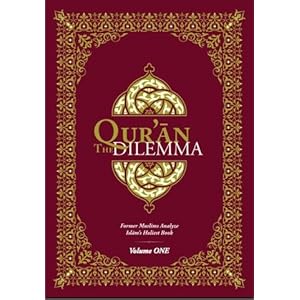
The Qur'an Dilemma

Have you ever wanted to dive into the Qur’an, yet didn’t know where to even start? “The Qur’an Dilemma” allows Muslims and non-Muslims to examine the Qur’an and look at each sura (or chapter) critically. Written by numerous former Muslims, who remain anonymous throughout the book, the book is divided into three main parts.

Part I consists of different articles on a host of controversial issues, such as women, the treatment of people of other faiths, and the chronological order of the Qur’an. This portion proved to be the most interesting for me. The authors explained that much like the Bible, the Qur’an has many different versions, published and edited by scholars of differing opinions on how the Qur’an should be organized. Also, the section covering people of other faiths, such as the Jewish population, served as a real eye-opener. The book continues on in Part II as the first nine suras are examined. Think of this as an intricate Bible study. The authors examine what certain words refer to and historical meanings behind passages. Part III holds resources, such as maps and a glossary, to aid the reader.

Overall, this book proves interesting if you enjoy examining other cultures. As for those who are already Muslim, I would imagine this take on the Qur’an would be intriguing as well. The authors claim that the Qur’an has never been critically analyzed before, as Muslims consider this holy book infallible. The core of this book rightly reflects the title: “The Qur’an Dilemma.” The authors continually point out that this holy book contains errors and issues that no longer apply to today’s society. However, no revisions are authorized. Therefore, many Muslims are presented with a true dilemma: how do you separate the truth from the negations in the Qur’an. My only issue with the book was the level of difficulty it presented. For an individual who has a basic understanding of Islam, I was constantly rereading sentences and continually flipping to the glossary to define a term. Some parts still leave me confused, however, I enjoyed expanding my knowledge concerning a religion that remains a mystery to many Americans.

3 stars

**I received a free copy of this book in exchange for my honest opinions.

post signature

February 2, 2012

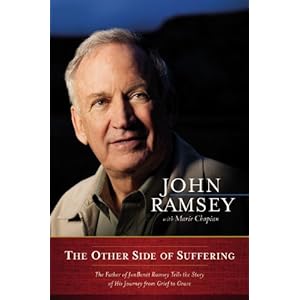
The Other Side of Suffering- by John Ramsey

Almost every person knows the story of JonBenét Ramsey’s murder on Christmas day of 1996. The tragic, brutal murder of such a beautiful, vivacious six-year-old girl captivated the entire nation and for years the suspicion would lay on her parents, Patricia and John Ramsey. After the media painted the portrait of these two parents, it was hard to see the truth, and the facts became muddled as the case went cold. In “The Other Side of Suffering” John Ramsey tells his side of the story for the first time, allowing readers to glimpse into his own personal Hell, full of grief, tears, and anger.

As John Ramsey courageously recounts the events that led up to this disaster, the reader is compelled by his details. While the beginning of the novel focuses on the loss of his young child, the majority of the book discusses John Ramsey’s faith in God. As a Christian, he wavers in faith after JonBenét’s death, a natural reaction as blame shifts from killer to self to God. A fellow sufferer, John Ramsey takes the reader on his journey to accepting his life after the murder of his daughter. Packed with emotion, unanswered questions, and a strong connection to God, this novel transcends every expectation in a delightful way.

Each individual in the world has experienced some sort of loss, whether it be a breakup, the death of a loved pet, or the death of a family member. The reader connects to John’s grief, not being able to understand how this man and his family overcame the evil and destruction that lay before them at the end of 1996. John claims, “tragedy doesn’t have to damage our souls” and I believe he proves this statement over and over again through his memoir. Inspiring all Christians to pray and proving the power of God, John Ramsey creates a book that all human beings can relate to. In the midst of suffering, everyone must find his or her way over the hill. Inspiring others to hang on to life and seek aid from friends, Ramsey creates a hopeful narrative on how to overcome life’s injustices, disappointments, and obstacles. Armed with his faith in God, Ramsey motivates all readers to believe that the best is yet to come.

5 stars

**I received a free copy of this book from the publisher in exchange for my honest opinion. This book will not be released until March 2012.

January 19, 2012

The Discovery of Jeanne Baret: by Glynis Ridley


At first glance, “The Discovery of Jeanne Baret” seems to be just another nonfiction novel, detailing the events that occurred in a deceased female’s lifetime. However, Glynis Ridley evolves this seemingly simple story and breathes life into Baret’s impressive life. At the end of the introduction to this novel, Ridley makes a statement that sets the tone for the rest of the book: “one human being, irrespective of the hand dealt by fortune, can have as much curiosity about the world as another. And that, like race and class, gender should pose no barrier to satisfying that curiosity and discovering how far it may take you.” Talk about a declaration for gender equality and the power of women!

But, the story of Baret is more than just a giant banner advocating women’s strength and determination. The reader first meets Baret as she grows up in her humble hometown in the Loire valley of France. Her parents were in the lower class of individuals during the mid-1700s and worked as day laborers. While Baret should have been subject to the same fate as her parents and expected to die in her early twenties, she possessed a skill that allowed her to escape this fate. Knowledgeable about plants, seeds, and their medicinal uses, Baret belonged to an ancient order of herb women who were often secretly sought out for their knowledge by doctors, surgeons, and sometimes students of botany.

Also in France, Philibert Commerson grew up in completely different conditions. Pampered by the success of his father, Commerson was given the chance to succeed in education and prompted to enter law by his parents. However, Commerson, known for his stubbornness, pursued a different course in life. Through his determination and risk-taking demeanor, he was able to fill his days with his one true love: botany. Commerson eventually married an even richer woman and settled down in Toulon-sur-Arroux, only a couple of miles away from Baret’s location. It was through a chance meeting that these two characters joined forces, exchanged knowledge, and set off on a journey that would allow Baret to become the first woman to circumnavigate the globe. Filled with adventure, romance, and a testament to the mental, emotional, and physical strength of a singular woman, this novel allows the reader to adopt Jeanne Baret as their new role model.

While the facts are fascinating and the plot intoxicating, Ridley continues to counter facts previously assumed about Jeanne Baret and her expedition around the world. Not possessing any prior knowledge about the events surrounding Baret’s life, I was not surprised by any revelations made by Ridley. However, the novel was still compelling and allowed me into the life of a truly remarkable woman. “The Discovery of Jeanne Baret” is not your typical biography and if you are not familiar with Baret’s story and accomplishments, I highly recommend reading this novel.

4 stars

**Note: If purchasing the paperback edition, do not forget to read Ridley’s afterword. It truly allows you to appreciate the ending of this remarkable story.

post signature

January 5, 2012

The Boy in the Moon: A Father's Journey to Understand His Extraordinary Son by Ian Brown

The Boy in the Moon: A Father's Journey to Understand His Extraordinary Son by Ian Brown is a nonfiction book about Ian’s son, Walker.  Walker has cardiofaciocutaneous (CFC) syndrome, an extremely rare genetic mutation.  One of only about 300 people worldwide with this diagnosis, he is unable to speak, compulsively harms himself, and will need constant care for the rest of his life. 
I liked that this book seemed honest.  Ian didn’t wax poetic about how Walker was an angel or had a higher purpose—in fact, he was suspicious of people like that.  He didn’t shy away from the hard questions and was honest about how brutally tiring it was to take care of his son.  It questioned the roles of responsibility, from the role of society, the government, and the parents. 
The first half of the book was chronological and flowed quite fast.  The material was both interesting and a little heartbreaking.  The second half was a little bit more difficult to get through.  It skipped around and ideas weren’t fully articulated or explained.  While self-reflection can be fascinating, Brown tended to ramble. 
Three stars

post signature

December 22, 2011

Real by Shelley Malcolm

“REAL” is a collection of 60 inspirational stories by Shelley Malcolm, with photos by Terilee Dawn Ouimette. The stories are deeply revealing, while the photos are anonymous, focusing only on each subject’s hands.

The book is divided into 11 different sections focused on one particular element of life - hope, love, inspiration, work, etc. Each of those sections includes pictures of hands and stories based on those pictures. The stories are about people from all walks of life including the rich and famous and people pinching pennies. As unique as each of the individuals are, they are all joined together in this beautiful book.

I received a paperback copy of this book to review but could see myself buying a hard cover version as a coffee table book for my mother-in-law. The pictures are beautiful and inspiring even without the written stories, and I am amazed by how much someone's hands can tell about their life. It makes me wonder what story my hands tell. I recommend this book, especially for anyone who loves photography and inspiring stories.

You can purchase a copy of the book here. Proceeds from all sales are split among various charities. If you'd like to see what other people are saying, you can check out other stops on the blog tour.

*I received a free copy in return for my honest opinion and review.
post signature

December 12, 2011

Laughing Through Life by Connie (Corcoran) Wilson

Laughing Through Life was certainly an interesting read as I journey through Connie (Corcoran) Wilson’s short stories that detailed her attempts at cooking, her disasters with shoes, and her views of none other than President George W. Bush. I wanted to love this book and quite honestly, I enjoyed the majority of it. The tales, while disjointed and not revolving around a singular theme except for the fact that they all occurred in Connie’s life, made me laugh out loud. I felt connected with Connie over her inability to keep grapefruit ripe and her observation that everything DOES go wrong at dinner parties where the main goal is to impress your guests. Also, let’s not overlook the story about her student who wanted to perform a mock interview for Hooters, and certainly dressed the part!


My only strong criticism of the book was her political content. I tried to remain unbiased throughout reading the entire book and believe I set some of my personal views aside with grace. I also understand that strong political views exist, and the fact that a woman such as Connie uninhibitedly speaks these opinions makes me proud to live in America where freedom of speech is rampant. However, I think the continual outpouring of these political stories distracted me from the main goal of Laughing Through Life: to make the reader cry with laughter. I would have liked to see the Bush jokes decreased a bit and more antidotes about her children and life experiences inserted in the book. Although, putting my personal opinions aside, I do have to say that her story about getting kicked out of the radio station for singing an anti-Iraq song proved hilarious.


Overall, this book made me laugh and smile, which I believe was Connie (Corcoran) Wilson’s goal. The novel reads like a collection of short stories, so do not expect an overall theme to be present, but this type of book was refreshing to read. I do warn that if you have strong Conservative views to not reading this book or to read with an open mind. Laughing Through Life just might surprise you.


3 stars.


*I was provided with a free copy of this book to review.

post signature

December 3, 2011

Unnaturally Green by Felicia Ricci

Unnaturally Green by Felicia Ricci is a memoir about a girl who understudied for Elphaba, one of two main witches in the musical Wicked, in San Franciso's company. Felicia's memoir captures her experiences with Wicked from her very first time seeing it on Broadway as a teenager to her audition to her experience performing four shows in one weekend for huge audiences.

This book was well written, easy to read, insightful, and hilarious. Felicia writes her memoir like she writes on her blog - like she's telling her story to a best friend - and I loved it. I love Broadway shows and learned a ton not only about the inner workings of Wicked but about the audition/show process altogether. Like did you know there's an understudy and a standby for the lead in major productions? The standby is the first person in line to perform when the main performer is out and the understudy is the backup to the standby and also performs in the ensemble. I had no idea.

I'm a lover of Wicked (I've seen it four times now) and devoured this book in about two days, eager to hear where Felicia's story would take her next. This book was overall not only fantastic but fascinating and I would recommend it to anyone who likes the theater, Broadway, and especially Wicked. An easy 5 stars. And if you don't want to take it from me, there are 44 other reviews on Amazon.com that are 5 stars as well.
post signature

December 1, 2011

Tolstoy and the Purple Chair: My Year of Magical Reading by Nina Sankovitch

Tolstoy and the Purple Chair: My Year of Magical ReadingThis is my mother’s new favorite book, and she recommended it to me. Tolstoy and the Purple Chair: My Year of Magical Reading is a nonfiction book that describes Nina Sankovitch’s project for reading away her grief—after the death of her sister, she reads and reviews one book per day for an entire year. Each chapter focuses on a larger theme: memory, desire, kindness. Nina weaves stories of her life and her sister’s life along with the messages on that specific theme from the books she read.

Tolstoy and the Purple Chair is beautifully written and often touching. I especially enjoyed the chapter on sharing books—I am a book loaner and love sharing books with the ones I love.

I liked the parts where she ties her own life and her own family’s history to the major topics. There were sections of the book that were slower, where she describes several books in a row and what she learned from them with no pause for her own stories. My personal preference is for more narrative, less essay.

One thing that surprised me was that she writes mainly about the message of the book, rarely about their style. I would have loved to hear about her top three favorite books, the ones that moved her the most.

If you love books and are comfortable with a book without a linear progression, I definitely recommend this for you.

Four stars.
post signature

November 27, 2011

The Poisoner's Handbook: Murder and the Birth of Forensic Medicine in Jazz Age New York by Deborah Blum


While the title The Poisoner's Handbook: Murder and the Birth of Forensic Medicine in Jazz Age New York doesn't exactly roll off the tongue, it is the perfect description of the content of this nonfiction book. 

I don't read a lot of nonfiction but when I do I like them a little edgy.   Each chapter of this book tackles a specific poison from arsenic to carbon monoxide.  The chapters cover the poison's history, its chemical properties, what exactly it does to the human body, and tells a few cases were the poison was used.  It simultaneously describes the efforts of the newly formed forensic pathology office in New York and how these professionals pioneered countless advances in this field.  

I really enjoyed this book.  While decidedly episodic in nature, it seemed to work because of the over-arching theme of the lives of the medical examiners.  I learned a lot reading this, especially about the politics of the Prohibition era. I would have liked to have seen photos from some of the cases described, especially when the author went into great detail about specific photos published in newspapers.  Keeping in mind that the book occasionally goes into gory detail, I recommend this book to anyone interested in history, medicine, real crime, or just some of the more macabre parts of New York's past.  

Five stars


post signature

November 11, 2011

The Quants by Scott Patterson

This is a first for Book Nook, a guest book review. This review is written by my dad, Dennis.

In college I took an elective course called “Recreational Mathematics” in which the professor took an interest in the way that I solved some of the gaming and logic problems that we studied.  He handed me a book and suggested that I read it and write a report as extra-credit; the book was from the 1960s and called Beat the Dealer by Ed Thorp, a mathematics professor.  I quickly devoured the book, wrote my paper and, like many others, tested the blackjack techniques live in Wendover, Nevada on a drive to California for Christmas.  The core idea of the book was mischievously appealing; through my knowledge of math I could and would make untold amounts of money all at the expense of a corrupt entity, the casino.  

I did not know what happened to Ed Thorp after he publicized his blackjack strategy until I recently read Scott Patterson’s The Quants:  How a New Bread of Math Whizzes Conquered Wall Street and Nearly Destroyed It.  In the early 70s, Thorp turned his expertise towards a different casino; Wall Street.  He and others like him developed sophisticated programs and strategies aimed at finding exploitable weaknesses in our financial system.  Patterson is clearly enamored with Thorp and portrays him as the book’s protagonist (calling him the “Godfather”) whose early writings and funds inspired imitators.  

Patterson details how some of the best minds in mathematics, physics and computer programming gravitated to banks, investment firms and private equity funds in order to “beat the market.”  Thorp’s first discovery was that the accepted models for pricing a speculative investment called warrants were flawed so he developed a better model and invested in warrants that were under priced; leading to significantly higher returns that the S&P.   Soon other “quants” were discovering other loopholes in the financial system and profiting from them.  Rather than close the loopholes, large investment houses such as Morgan Stanley and Lehman Brothers invested and profited from these “quants.”  Over the next thirty years the financial system would be become a cyclical house of cards with large institutions becoming dependent on mining these statistical loopholes.  One of the problems was that nobody truly understood from where the money was generated.  Nobody disputes where the money comes from when you win at 21; the casino.  But if you discover out and exploit a guaranteed loophole in our financial system (making billions of dollars in the process), who writes the check?  

The Quants is a well-written examination into the world of investment and quantitative models.  Patterson is generally sympathetic to his subjects and takes care not to vilify anyone.  This is both a strength and a weakness of the book.  As a writer, Patterson is morally ambiguous towards his topic and his subjects.  If anything, he seems sympathetic to the quants and envious of their earning power.  His portrayal of Ed Thorp is emblematic of his approach.  As a reader, Patterson makes me want to believe in Ed Thorp; a scrappy everyman who uses his mathematical gifts to “beat” large institutions such as casinos and Wall Street.  Thorp never seems to make a misstep and is always the one who predicts the market’s problems before the other quants do.  He gets out of the market in 2002 well before the current recession.  He jumps back in 2008 and delivers a return of 18% (despite massive losses in the Dow that year).  

But Patterson tells some stories about Thorp make me wonder if we are getting a saintized version of the man.  For example, In 1991 Thorp decides to stop managing an investment fund and works as a consultant for some large pension funds.  He is asked to evaluate their holdings including a fund that has been making unbelievable returns for the past 10 years (returns even higher than his own).  It took Thorp one day to delve into the fund’s holdings and to conclude that the pension fund should sell its holdings immediately out of Bernard L. Madoff Investment Securities.  Thorp had discovered that the fund was a fraud.  Patterson uses this story to celebrate how smart Ed Thorp is.  For me, this story is wrought with ethical issues.  Didn’t Thorp have a responsibility to share this information with more than just the pension fund?  The Madoff fund continued to function for the next 15 years?  Wasn’t Thorp ever tempted to share his findings with others?  How many investors could have been saved by a little charity from Thorp?   Thorp did what he was legally and financially obliged to do (just like Joe Paterno).  But there is part of me that expects a little more.  Patterson’s portrayal of Thorp as a quantitative saint is little hard for me to swallow; maybe it is because I expect more from my saints than just being smart, clever and rich.   

The biggest difficulty that Patterson overcomes is taking two extremely difficult subjects (advanced mathematics and Wall Street) and crafting a readable narrative.  He does this by 1) never intricately discussing the most difficult math, 2) focusing on the fund managers and 3) using gambling and poker as an organizing motif.  While Patterson is able to make his narrative easy to read, I never fully understood the world I was witnessing because the math was never fully explained.  To better understand the quants  Patterson’s book is a good outline but I am hesitant to make conclusions based on the nature evidence he has provided.  

Patterson attempts to make the case that most of the market meltdowns that we’ve witnessed in the past 30 years have been directly linked to the activities of the quants.  This includes Black Monday, the tech stock bubble and the current recession.  While I agree that the quants contributed to all three events, I believe that Patterson overstates the impact of the quants.  Nevertheless, the book’s biggest impact on me is that I will never view Wall Street in the same way as I did before reading his book.  4 stars

November 6, 2011

Columbine by Dave Cullen

How do you even begin to review a book like this one? To put your thoughts down in words about a book so real, so disturbing, and so well written? It's hard to figure out my own thoughts, let alone write them for you to read and analyze. But I'm going to try because this is a book that should be read and a story that should be understood.

Columbine by Dave Cullen is a non-fiction book that explains not only the how, and what happened during the Columbine High School shootings on April 20, 1999, but the why. It delves into the lives of not only the victims of the shooting but the shooters themselves, and I think that's why this book is so necessary. While the book is factual and based on years of research and interviews, it reads like fiction and at times you forget and are incredulous that this tragedy actually happened.

Cullen jumps around from the years leading up to the shooting, to the day of the shooting, to the days and years following the shooting. This type of writing structure can be dizzying and confusing in other books, but in Columbine it works in a way that allows Cullen to fit together all of pieces of this confusing puzzle. The other thing that I loved about this book was that it presented the evidence without assumptions and without placing or avoiding blame. When a tragedy occurs, people always want to know who's at fault. Cullen presents the facts in a way that they are really just that, facts. At no point in the book did I think, oh Cullen thinks that it's the fault of this person. Or that if this person did this, Columbine wouldn't have happened. Because really, you never know. No matter what anyone did, it still might've happened and I appreciate that he didn't dwell on the "what if," but rather focused on the reality.

In short, while difficult to read because of the disturbing nature of the subject, this book was one of the best I've read in a long time and I recommend it to anyone, again with the caveat that Cullen is transparent in his knowledge. He presents the facts and tells things like they are, which at times is tough to handle. But in the end, when tragedy occurs, people want to know why. And through Columbine, Dave Cullen helps readers understand why. 5 stars

Check out Sarah's thoughts on the book in her review from September 2010 here.

 post signature

October 19, 2011

Folks, This Ain't Normal by Joel Salatin

In Folks, This Ain't Normal, Joel Salatin describes how the lives we lead in the 21st century are just not normal.  The way we view food needs, food quantities, conservation, the environment and even our families are unlike those of any other time in history before us.

When we take a look back into history, just 75 years ago, we see that things were done very differently.  Some of this change has been great... the advancements in medication, simplicities of transportation, etc.  But with this change, other issues have arisen and our world is facing the consequences of poor management for the past century.  Salatin says that the way we do things today, and our mentality about these things, "just ain't normal".  In his book, he outlines practical steps to return to normalcy.

Joel Salatin knows what he's talking about.  He was one of the featured farmers on a little documentary (perhaps you've heard of it) Food Inc.  He is also a distributor for the national food chain, Chipotle and runs a magnificent farm, Polyface.

Personally, I found this book to be so interesting, but a little too detailed.  Truth is, I'm not a farmer... and although I'd like to make small steps to become more "green", I can't see myself doing some of the stuff he recommends.  And, that's just the problem he speaks about... people like me, normal non-farmers, who are not willing to make a change.  Eh.

He goes into extreme detail about forestry and the different needs for the different trees.  I don't know the difference between a palm and a pine (ok maybe that one, but you know..).  He talks for page after page after page about manure.  I don't need to know all that crap about... crap.  He challenges us suburbanites to get 2 chickens in our backyards.  No thanks.  He goes bananas on people who play video games.  He calls women to their proper place... the kitchen.  He tells us we shouldn't rely on supermarkets to supply our food, but should have a years supply in our basement.  Although true, that's quite a task!

Although the book was really interesting, some of it was just hard to swallow.  I think this book would be great for agricultural buffs, real greenies (not the farmers market kind), and people ready to make BIG changes.  For me, it read a little like a text book and was hard to get through... in fact, I only made it 60% through.

I'm not going to rate this one with stars... that would be unfair.  This just wasn't the book for me, but it may be for you.  Give it a try... at the very least, you'll learn something completely new.  And, who knows?  Maybe you'll get inspired!

I received a free copy of this book for the purpose of this review.  These are my honest thoughts and opinions.
post signature

October 17, 2011

5 Levels of Leadership by John C. Maxwell

What makes a good leader? A title? People skills? Getting work done? How about all of the above. In John Maxwell's new book, he explains what he calls the Five Levels of Leadership - position, permission, production, people development, and pinnacle - and tips for achieving each of these different levels in your own leadership roles.

I really liked how organized this book was. The first few chapters provided the background behind the five levels of leadership and then the subsequent chapters walk through details regarding each of the levels. Each specific level includes information regarding the upsides, downsides, how to make the most of the position, and ways to transition from that level to the next one up the ladder. I felt that this organization allowed me to get the most out of the book, and there was a lot to get out of the book so I really appreciated that.


Overall a great book on leadership and learning how to develop better leadership skills. I'd recommend it to anyone who is in or would like to be in a leadership role. 5 stars

October 16, 2011

Invisible by Hugues De Montalembert

What would you do if suddenly you could no longer see the world around you?  The leaves as they change from green to red and yellow, your favorite movie, or the smile of the one you love. Would you be able to overcome the obstacle and chalk it up to another one of life's lessons or would your life turn to turmoil and despair?

Painter Hugues de Montalembert's life included a little bit of both. Attacked one summer night in his New York apartment, this man whose livelihood depended on his eyes, lost his sight forever. Invisible is a memoir of his experience adjusting, growing, and at times, failing as he learned to live his new life. As he put it, "Many people think the loss of my sight has been a terrible rupture in my life. But no, it's not a rupture at all - life just went on, but in a different way."

The book is full of his own personal experiences, experiences of others, and philosophical comments on learning how to see without your eyes. The writing is randomly split up into small chunks focusing on a point or story that the author is trying to make. While it helps to keep the book moving, it also made it difficult to connect the dots on an overall idea and purpose behind the book.

Honestly, at times (especially during the philosophical moments) it was awe inspiring to learn along with him and at other times I was bored with his experiences and ready to read something else. It's a very short book (125 pages, some pages with only a few lines of text) and was worth the hour or so it took me to read, but I'm not sure I'd recommend it to a friend, possibly someone who has gone through tragedy (especially affecting their sight) and needs to read and hear about others experiences into darkness and back, but not just your average reader. 3 stars

I received a free copy of this book for review purposes.


September 9, 2011

Thriving at College by Alex Chediak

If you could give a college freshman any one piece of advice what would it be?

My little sister starts her freshman year on Monday and I've been thinking about that question a lot this summer. A couple of months ago I was asked to review a copy of Thriving At College and thought, oh this would be a perfect present for my sis. I'd planned to not only read the book but to take notes in the margins with my own insights. Join study groups. Go on road trips. Take fun classes. Don't take an 8AM class. Things like that.

So I opened the book with pen in hand and got ready to write these inspiring notes that I knew my sister would appreciate when she got homesick or needed some loving advice. It didn't work out so well. While Thriving at College was full of good information, it wasn't really what I thought or hoped it would be and not a book that I'll be sending to my sister to read.

Thriving at College is structured in four main sections - College Matters, Relationships Matter, Character Matters, and Academics Matter. Within each of these four sections are subsets of information surrounding a specific common college mistake, things like chucking your faith, distorting dating and romance, living out of balance, and wasting opportunities. There really is a lot of great information contained within each of these sections, and I completely agree with avoiding each of these mistakes.

However, other than making college students aware of these common mistakes (which is great), I didn't really see any practical ways to avoid these mistakes. I was expecting something more similar to 7 Habits for Highly Effective Teens - principles with tools for practical application. Also, I found that there was way too much text that made me just want to skip sections completely. I would have preferred more images, charts, bullets, or other things to break up the continual copy. This book was written for beginning college students who have plenty to do already, they need something short and sweet that will give them practical and useful ways to make it out in the real world.

So overall, good information but not my favorite way of sharing it with readers. 3 stars.

I received a free copy of this book from Tyndale Publishers in return for my honest opinion. This is it.


August 27, 2011

Zeitoun by Dave Eggers

Zeitoun is a non-fiction work, depicting the experiences of one family before, during and after Hurricane Katrina devastated the city of New Orleans.

The book follows Zeitoun, a Syrian immigrant who has made a life for himself in the States.  He is a prosperous businessman who owns a painting company that is well known around the city.  He and his wife, Kathy, proudly practice Islam and raise their 4 children to be kind, loving and honorable people.

When Hurricane Katrina threatened New Orleans, no one truly believed it would hit.  Zeitoun had seen storm after storm come by and barely blow over a few trees.  He was adamant about the fact that he would stay, regardless of the circumstances.  As the news became more forceful with evacuations, Kathy and the kids decided to take refuge in Baton Rouge.  Although they begged Zeitoun to join them, he refused, saying that they had their house, their business and their rental properties to look after.

In the days after the storm and flooding, Zeitoun took it upon himself to travel the city in his canoe, bringing water and food to stranded people and animals.  He felt important and called by God to be an aid. Little did he know that the government and authority structures were collapsing and he would soon be in a whole lot of trouble with FEMA, the National Guard and Homeland Security.

I will not go into further detail here about the story.  Let me just say that it is angering, saddening, horrifying and unbelievable.  While reading, I had to keep reminding myself of two things: 1. This was 2005... not WWII and 2. This was AMERICA.  The way the system fell apart and collapsed is just appalling.  It really made me think... this just happened to ONE city... what if it were an entire state?  or region?  or country?  There would be wide spread mayhem and we would be in a savage situation.

About the writing:  I thought Eggers' prose was descriptive and beautiful.  He truly captured every detail, smell, sound and condition.  Some reviewers have said that Eggers has "writers ADD" because his story pulls away into side stories every few paragraphs.  The story does not move in a straight chronological line... instead it reminds me of a centipede... as you read about the main story, little legs sprout about giving side stories that depict the characters life, family, past decisions, etc.  I felt that it added so much more humanity to the characters and made me understand where they were coming from.  My only complaint would be that at times there is a repetitive nature to the day in and day out activities... but that would be the case, considering it's a true story.

5 Stars


July 5, 2011

The Secret History of MI-6 by Keith Jeffery

Britain's Secret Intelligence Service (also commonly known as MI6) was born a century ago amid fears of the rising power of other countries, especially Germany. The next forty years saw MI6 taking an increasingly important-and, until now, largely hidden-role in shaping the history of Europe and the world. This thorough, fascinating, and revelatory account draws on a wealth of archival materials never before seen by any outsider to unveil the inner workings of the world's first spy agency.

Some fun tidbits from the book:

-- Spy writers. Somerset Maugham, Malcolm Muggeridge, and Graham Greene were all M)-6 operatives (as this book reveals for the first time).

-- James Bond: true and false. Ian Fleming's fictional MI-6 agent is likely based on actual agent Wilfred "Biffy" Dunderdale, a friend of Fleming's. Unlike in the Bond novels and films, no MI-6 agent has a "license to kill".. However, Q, the gadget-making super-scientist of the Bond series, is based on reality.

-- In 1941, a British spy was arrested in Madrid dressed "down to a brassiere" as a woman. Unsure whether he was a spy or simply a cross-dresser, Spanish police soon released him. He was transferred to Cairo where he had "a brilliant career in deception."

-- In 1949, MI-6 seriously considered peddling confiscated opium in Asia to raise funds.

-- Friends in high places. Arthur Ransome, another writer/spy, worked in the Soviet Union and had as his mistress Leon Trotsky's secretary.

-- In 1941, an MI-6 operative infiltrated a posh casino on the Dutch coast from the sea - wearing a tuxedo underneath his wetsuit.

-- In the late 1940s, MI-6 operatives blew up ships in Italian ports to stop Jewish refugees from sailing to Palestine.

-- MI-6 was famous for running the British code-breaking program during World War II, but few appreciate its other innovations from that decade, such as knockout drops, silent weapons, and exploding file cabinets.

July 4, 2011

Son of Hamas by Mosab Hassan Yousef

Son of Hamas tells the true story of the life of Mosab Hassan Yousef, son to one of the most influential and powerful Hamas leaders.

This account tells of the struggles in the Middle East between the Israelis and the Palestinians.  Mosab's father, Sheikh Hassan Yousef, is a devout follower of the Qu'ran and Allah and became one of the top organizers and leaders of Hamas.  Hamas is an organization that, in short, supports terrorism in order to support the Palestinians goals of land domination and control.  Being the son of this influential leader, Mosab had access to top secret information concerning suicide bombers, terrorists and other attacks.

Mosab was imprissoned as a young man, and later was recruited to be a secret spy for the Israeli government's Shin Bet.  As an insider with easy access to the Palestinians plotting, he became invaluable to the Shin Bet and helped stop or put to justice many terrorist activities.  Along the way, he also withdrew from his religious culture and became a follower of Jesus!  As he learned more and more about God and Jesus' teachings of forgiveness, mercy and grace, his moral compass began shifting and he found himself loving the very people his father's religion had taught him to hate.

This book was incredibly interesting... especially if you are a political guru.  Unfortunately, I am not.  I am too young to truly know the ins and outs of what happened during the 90's in the Middle East.  If I had known more about that, I'm sure this book would have been eye opening and revealing.  Even with my ignorance, it was still a great read.

I was fascinated by this glimpse into a culture that is so consumed with hatred.  And I loved how Mosab's heart begins to soften and change as he becomes a Christian.

I read this on my Kindle... which may have been a mistake.  Throughout the book, I was utterly confused with the sheer number of people named.  It was so hard to keep track of who was who... and their names were all so similar!  Also, he makes references to organizations and societies, and uses abbreviations that became confusing as well.

But, as I said, since I read it on my Kindle, I didn't realize that there was a list of people, a glossary and a time-line at the end!!! Uh, that would have been helpful!  So, if you do get it as an e-book, remember to bookmark the last 3 chapters.

3 Stars


Related Posts Plugin for WordPress, Blogger...