August 31, 2009

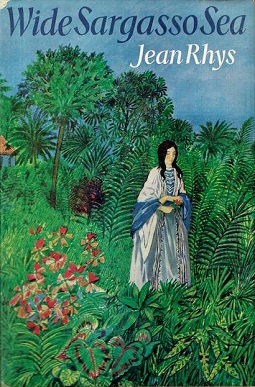
Wide Sargasso Sea by Jean Rhys


Wide Sargasso Sea: A Novel by Jean Rhys is a lovely tale all on its own though it also serves as a prequel to Bronte's Jane Eyre.

Rhys relays the story of the first Mrs. Rochester, poor Antoinette, married off by a step-brother to a cold-hearted man who gladly assumes ownership of her wealth and her heart, caring only for the former and breaking the latter before moving her away from her sunny Jamaica to dreary England. By the time she sets fire to the mansion, you'll be rooting for her; I was.

~Suzanne

Technorati

Coming Attractions by Robin Gunn

I was given a copy of Coming Attractions by Robin Gunn to review by the publisher as part of a blog tour. The first thing I noticed when I got the book was that it was part of a series, the Katie Weldon series. I don't know about you, but I'd never heard of that series (or Gunn's other series, the Christy Miller series) before so I was intrigued. I'm a sucker for a good series so I was pretty excited when I first started reading the book.

And I was still excited the next day when I got to the last page of the book and Gunn left the ending somewhat open, like there will be another book in this series. I'm not sure if that's true or not, but if it is, I'll definitely pick it up.

Coming Attractions is about Katie Weldon. She's a senior in college, has great friends, the perfect boyfriend, and everything all laid out in straight lines to where she eventually wants to go. The problem is that Katie doesn't really like straight lines, she likes wavy ones. With the help of God and a boyfriend a little too eager to get married when he learns about her large inheritance, Katie figures out how to get back to the life she wants to lead instead of the one she thought she was supposed to.

Gunn's writing is easy to understand and read, her characters are extremely relatable (who hasn't wished their life were more spontaneous and less planned out), and the story moves along quickly. The only part of the book that could have been improved for me was that the plot was fairly predictable, but it ends happy, which I couldn't complain about. I knew what was going to happen from reading the back cover and the first chapter of the book.

With all of its positives and negatives, this is a good read if you have even a little bit of free time. Nothing ground-breaking, but a good positive story to help remind you to follow your heart even if it doesn't seem like the best decision to everyone else. 4 stars.

August 27, 2009

The Last Woman Standing by Tia McCollors

I was given The Last Woman Standing to read for a blog tour that happened a while back. I didn't get the book until the actual week of the tour so I got caught up and couldn't read it until this week. I finished reading it in two days (it's a pretty easy read), but I'm not sure if that's because I couldn't put it down or because I just kept hoping that something exciting would happen.

This book can be summarized in one line- a divorced couple falls in love again and easily get back together.

This book has a lot going for it, maybe too much. It felt like a combination of a lot of books that I've read in the past year. It had romance, deceit, faith and religion, debt, friendships, etc. The problem I had with the book was that it didn't develop any of those themes well enough for me. I just kept waiting for the sparks to really fly or for the jealous ex-girlfriend to really do something horrible and not just dream about it. But it didn't happen, and I was left wanting a real conflict that I didn't already know how it would end. The writing was fine but nothing ground-breaking. So overall this book was okay but not special and not going to the top of my must-read list. I don't regret reading it, but I probably wouldn't pick it up again anytime soon.

August 26, 2009

ISO: Good Christian Books

If you've been reading this blog very long, you know how I feel about Christian fiction. If you haven't, you can read my rant here.

I have a dilemma. I am a Christian, and would very much like to read fiction from my fellow believers. However, I am also a very discerning and picky reader. I need some recommendations for some Christian books that are well written and not laden with cheese or fluff (a little cheese is okay, but I don't want to get constipated, you know?). In the past, some Christian writers I have enjoyed are Frank Peretti, Beverly Lewis, and Jan Karon. My church has its own library, and I grabbed a couple Francine Rivers books that came highly recommended, including Redeeming Love. Can anyone recommend anything else?

August 25, 2009

Dead Until Dark by Charlaine Harris

I admit it. I read the Twilight series, all of them, in about a week because I was hopelessly addicted. I wanted to hate them because my 12 year female students were absolutely obsessed and I was convinced that my literary tastes were far more evolved and there would be no way I could even get into such juvenile writing. Well, lo and behold. I read them and enjoyed them.

Let's be clear. Dead Until Dark is nothing like Twilight. Sure, there are vampires in both, but that's right about where the similarities end. I picked up the first of this series based solely on the fact that I became hopelessly addicted to the HBO series "True Blood," which is based on Harris's series. This is probably the first time I will actually say that I preferred the TV version.

Dead Until Dark is about Louisiana waitress Sookie Stackhouse, a quirky, likeable woman who has a "disability:" she can read minds. Along comes Bill Compton, a vampire who takes a certain liking to Sookie and who she is immediately drawn to because his mind is, for one reason or another, closed to her. The first book in the series deals with the initial stages of their romantic relationship and the mystery of who is murdering the women of the small town of Bon Temps who are known to be "fang-bangers."

I enjoyed reading this book, as one might shamelessly enjoy an Arbor Mist while everyone else is drinking Pinot Noir. The writing is far from literary genius, the dialogue can be a bit goofy, and the plot takes some strange jumps at times, but it's a good fluff book if you're looking to be entertained. I will probably continue with reading the rest of the series simply because I had to cancel my HBO to bring my cable bill down, but I'll still rent True Blood when it comes out on DVD to get the racier, edgier version of this story.


August 23, 2009

The Woodsman's Daughter by Gwyn Hyman Rubio

I didn't like this writer's hugely successful debut novel, Icy Sparks. But I admit that I didn't like it because Rubio fell victim to that device so many writers abuse: ridiculous nomenclature. Let's see. I want my book to really stand out, but I'm afraid I'm just not that great at character development. So I'll give my characters some really yooneek names that will make them stand out. Then maybe no one will notice my shortcomings. What does that sign say up ahead? Watch for Falling Rock? Awesome! Has a sort of Native American feel and poetic depth to boot. Falling Rock it is! "Falling Rock was raised on a small farm. Her favorite pastimes were..."

In Icy Sparks, the name was distracting and took away from the overall message of the book, which was to create awareness of the commonality and struggles of Tourette's Syndrome. So when I saw The Woodsman's Daughter, I decided to give Rubio another chance.

I couldn't read further than the first chapter. The dialog was forced and unnatural. The descriptions were vomit inducing, literally. Her characters are always dribbling saliva or getting food smeared on their faces or clothes and just letting it sit there and congeal. The familial relationships are totally inappropriate and just strange, they get angry very suddenly for no reason, and you can't tell from one moment to the next if person A likes person B or hates their guts. It seems like Rubio wanted to make certain issues apparent at the expense of others, leaving the reader completely confused. Maybe there's an explanation for this, but one is not apparent. Either these characters too suffer from Tourette's Syndrome, or they simply blurt out things entirely out of context just to fill space. I really don't know. But I just couldn't stand to read another page.

August 21, 2009

Hugh and Bess by Susan Higginbotham


After reading and loving The Traitor’s Wife, I eagerly anticipated Higginbotham’s sequel of sorts, Hugh and Bess. When it finally did arrive, I became so wrapped up in the soapy romantic drama that I dropped everything and finished it in a day. The story centers on a young Elizabeth de Montacute or Bess, the daughter of favored Earl and the much older, Hugh le Despenser, a wealthy (yet disgraced) Lord. Hugh’s grandfather and father were executed as traitors, and Hugh’s father was accused of adultery and sodomy with the former King. Hugh himself was imprisoned missing a near execution himself, but is now working hard to restore his family’s honor. Bess is understandably horrified at marriage into a family with such a reputation, and Hugh is honored by the match in theory, but he is in love with another woman. Can they find happiness in a marriage that neither sought and both are entering with reluctance?

At the heart of Hugh and Bess is a love story. Higginbotham manages to give Hugh and Bess an electric chemistry that compels throughout the historical drama. What makes the plot successful is Higginbotham’s tendency to ground the story in known facts then realistically elaborate the humanistic elements. For example, Bess begins the story at 13, and she reads and feels—13. This is a refreshing change from the tiny calculating power hungry seven-year-old cliché that dominates the historical fiction genre. Those who have read The Traitor’s Wife will be pleased as we get a few more glimpses of favorite characters. And this story takes care to fill in gaps in time, and show that story from different perspectives. You’ll want to read the Traitor’s Wife if you haven’t not because it is necessary for Hugh and Bess, but because it’s a great novel.

That said; the last few chapters seem to drag. We’ve moved on from a lot of the action, and not to spoil and plot lines, but the climatic challenges that face the couple, and the ensuing chapters read like and after thought. It was almost as if Higginbotham had fallen in love with her characters and was unwilling to let go. Also, having read The Traitor’s Wife, and other historical works of the time, I still found it hard to place some of the minor characters. It doesn’t help that the English nobility of the time only used a couple of family names repeatedly, ie, Elizabeth, Hugh, Edward, Isabella, Joan, William, etc… A little more guidance and more thorough introductions would have been helpful.

However by focusing on the romance, Higginbotham delivers a relatable historical fiction piece that transcends generations. If you (like me) just can’t get enough of these English court novels, I’m certain you’ll love Hugh and Bess.

Murder on the Down Low ($25 Giveaway) by Pamela Samuels Young

I haven't had a chance to read this book yet but it's on my nightstand (I just got it) waiting to be read. Based on the back cover I'm excited to read it but just didn't have time before this blog tour. I will post a full review of the book later but for now, here's a quick synopsis-
A high-profile lawsuit erupts into chaos, revealing its place in a larger spree of violence in this scandalous tale of lust, lies, and vengeance. A brazen gunman is targeting prominent African American men on the streets of Los Angeles, and police are completely baffled. At the same time, savvy big-firm attorney Vernetta Henderson and her outrageous sidekick, Special, lead the charge for revenge against a man whose deceit caused his fiancée’s death. For Special, hauling the man into court and suing him for wrongful death just isn’t good enough. While she exacts her own brand of justice, a shocking revelation connects the contentious lawsuit and the puzzling murders.

Maybe it was the whole high-profile lawyer thing or the murder and mystery that sucked me in, but I'm excited to read this book. If you didn't know already, I love legal thrillers (hence Jodi Picoult being one of my favorite authors), and this is supposed to be a pretty good one. So once I have time to read this book, I will definitely post a full review. But for now, you can check out the reviews on Amazon.
The back cover sucked me in. What makes you want to read a book? Leave me a comment telling me what makes you want to read a book and you'll be entered in a giveaway for an autographed copy of the book and a $25 gift card from Pamela.

August 20, 2009

Influential Books

Sorry I haven't been reviewing lately. In fact I've been in something of a reading rut. I simply haven't felt like reading for awhile, which is very strange for me. I've felt like I've been inundated on all sides, planes, and dimensions by words and noise and couldn't think clearly. I'm reading again now, so I'll be reviewing again soon.

In the meantime, I saw a meme on Facebook in which you're supposed to list 15 books that have influenced you and I thought that would be fun to do on here. Not favorite books mind you, but influential books. You can hate a book and it can have a big impact on your life nonetheless, and you can love a book that doesn't exactly mark a turning point in your life. Here are mine in no particular order.

1. The Alchemist by Paulo Coelho (following your life's path)
2. The Bluest Eye by Toni Morrison (self-worth)
3. Cider House Rules by John Irving (looking at two sides of an issue in a totally objective way)
4. The Bible (oy, both good and bad there I'm afraid)
5. The poetry of Emily Dickinson (the simple beauty and potency of individual words and phrases)
6. The poetry of Pablo Neruda (how breathtakingly beautiful language can be, in any language)
7. The Giving Tree by Shel Silverstein (I know this is supposed to be about the earth, but for me it's the mother-child relationship)
8. Spiritual Midwifery by Ina May Gaskin (the only writer to tell it like it is regarding childbirth, without condescending or white-washing)
9. The Darkness series by Frank Peretti
10. Romance as a genre (in a very negative way, as per expectations of real relationships)
11. The Sword of Truth series by Terry Goodkind (negative and positive, it freaked me out but also showed me new ways to think creatively)
12. Everything by Terry Pratchett (again, new ways to think creatively)
13. The Babysitter's Club series (I was always a big reader, but this series is what really turned me into a bookworm, lame as that may be)
14. Pride and Prejudice by Jane Austen (I've re-read this at every stage of my life and get something more out of it every time)
15. I don't remember the name of it, but there was a book my mom bought us when we were kids about the right way to clean a room. I've followed its direction my whole life.

I'll Never be French (no matter what I do) by Mark Greenside

I must confess that I do not read a lot of travel books, but I was impressed with I’ll Never be French (no matter what I do): Living in a Small Village in Brittany. Despite the lengthy title, the book is actually a rather brief literary romance between a man and his coastal French town. Against Greenside’s best efforts, he and a girlfriend plan a vacation to France. The relationship doesn’t last, but Greenside’s growing affection for Brittany and the populace does. In the rashest move of his forty some years, Greenside is coerced into the purchase of a house. Comical miscommunications, anxiety, and miraculous good fortune ensue.

One of the things I enjoyed most about this book was the total debunking of the myth that the French hate Americans. Total. Debunking. Instead the charming and ridiculously polite strangers, neighbors and friends that Greenside meets, go above and beyond to help him out. They come across as near saints because it turns out that Greenside needs a lot of help. Self styled throughout the book as an incompetent, he spends a few chapters of the book in dirty ripped pants, repeatedly falling out of his window and buying things he has no way of paying for. Greenside effectively bumbles his way through life in France reconciling his bi-continental lifestyles. He compares himself to a three year old an apt description that endears himself to the reader and French alike.

It’s worth noting that Greenside speaks and understands very little French. And his way of communicating such frustration with the reader, is to include a lot of French dialogue that he doesn’t translate. So unless you have a working knowledge of French, Greenside leaves you as lost in the conversation as he was. While it is an effective technique and does incorporate the reader, it can also be irritating to traverse.

Injected with humor, I’ll Never be French, transports with its descriptions. For those of us who will never make it Brittany, or who have been and are interested in Greenside’s take, it is a delightful arm chair travel experience. Diane Johnson of L’Affaire, Le Mariage and Le Divorce fame calls it, “one of the nicest of the trillions of books about France.” And I’d agree with that.

August 19, 2009

This is Where I Leave You by Jonathan Tropper

As a rule, I try to always finish a book once I have started it. You never know when you'll hit that magic moment where the story suddenly grabs you and you are transported into the author's world. Unfortunately, I just couldn't do it this time and I called it quits on this one before I had made it five chapters.

I originally picked up Tropper's novel because it sounded quirky and fun. The main character, Judd, has recently discovered that his wife has been having an affair for the last year with none other than his boss and to top it all off....she's pregnant. Oh, and did I mention that he finds out that charming little last detail on the same day that his father dies? Yeah, things are are not great in Judd's world. His father's last request was to have his entire family, mom and kids, all live together in the same house for an entire week, so Judd heads to the funeral to bury his dad and "sit shiva" with his mother and siblings. Let the dysfunction ensue!

Sounds interesting, right? I thought so too. What I did not expect was for the majority of the first handful of chapters to be taken up with extremely vulgar and unnecessarily detailed descriptions of Judd discovering his wife's affair. He is unfortunate enough to actually walk in on her in bed with the boss-man....on the wife's birthday no less. Let's just say the birthday cake Judd is holding, complete with candles aflame, ends up in a rather uncomfortable spot for boss-man. Sure, it sounds funny, but reading about this encounter for page after page with one f-bomb after another sprinkled in among the dirtiest little details describing the scene quickly became too much for me.
Perhaps those of you with a stronger constitution can give this the ole college try and dispute this review. Let me know that if I had only hung on a little longer, I would have discovered a true literary gem. I'm anxious to hear what the rest of you thought of this one, as it was just too foul for my palette.


August 18, 2009

Welcome, Kaylyn!

Welcome Kaylyn, our latest Book Nook reviewer! Kaylyn is friends with long-time Book Nooker Britni (can you call a year and a half a long time? I guess if it's in blog time!), and loves reading a wide variety of books.

I look forward to reading your reviews, Kaylyn!

The Story of Edgar Sawtelle by David Wroblewski


I picked up this novel after checking out the library's "Don't Miss" list and on the recommendation of one of my teacher pals. Actually, she hadn't read it because she is a HUGE dog person and can't handle reading anything where a dog dies (sorry if I just spoiled it) anywhere in the novel, but she had heard wonderful things about this book. I decided I needed to check it out and report back to her on whether or not she could handle reading the whole thing. The verdict? Lynn - READ THIS BOOK!!!

No small undertaking at nearly 600 pages, this book requires a bit more effort than your run-of-the-mill novel. The payoff? An extremely well-written, haunting story that sticks with you and leaves you feeling sad, yet enlightened. The Story of Edgar Sawtelle is the story of a young boy, Edgar, who is born mute. He grows up on his family's farm in northern Wisconsin (Woot! Woot!) where they run a dog kennel. Now, this dog kennel is not the puppy mill that we have come to imagine in our modern days. This is a high-class operation, an epicenter of selective breeding, rigorous training, and other practices that result in the creation of the "Sawtelle dog," a unique breed all its own. Although Edgar is the clear protagonist, the reader also comes to know and love his dog, Almondine. Unlike the dogs the family breeds for a living, Almondine is the house dog that has been by Edgar's side since the moment he was brought home as a newborn. Even though Edgar cannot talk, Almondine understands him perfectly and the relationship between these two characters is nothing short of mesmerizing.

It is hard not to pick up on the Hamlet-like trajectory of this tale. Edgar, son of Gar, is shaken to the core when his beloved father suddenly dies and his uncle, Claude, gradually infiltrates his father's place at the kennel and in his mother's arms. Complete with a Polonius character named Page (honestly....the author made this easy!) and the appearance of a ghost saying "Remember me!" anyone who knows a hawk from a handsaw can understand the direction this plot will take. What makes Wroblewski's novel so interesting is that it isn't just a Hamlet knock-off. The Sawtelle dogs (and Almondine) become as interesting of characters as the humans. Plus, the ghosts being dealt with are both on the farm and in the hearts of the players. The eloquent use of language - ironic considering the main character is a mute who is obsessed with language - combined with a unique approach to using narration creates a very enjoyable novel. This is one to take your time with, savor, and enjoy as long as possible. 4 Stars!


August 17, 2009

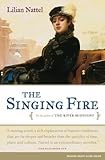
The Singing Fire by Lillian Nattel


The Singing Fire: A Novel by Lillian Nattel: I had very much enjoyed her first novel, The River Midnight but this one didn't grab me.

Set in the Yiddish ghetto of Victorian London, the novel traces the lives of two immigrant women, both victims of oppressive male dominance, sometimes in the form of a friendship-feigning pimp, sometimes in the form of a cruel step-father, or the usurious tutor. Children are conceived, miscarried, abandoned, claimed and cherished. One woman escapes the ghetto into a cold marriage, one escapes a cold marriage, but not the ghetto.

Nattel carefully draws the setting and details it richly. I may have read too much Anne Perry to fully appreciate the care with which Nattel presents Victorian-era poverty. Or perhaps I am weary of the 'most men are bad' theme. Nattel is a good author and I am disposed to like her work, this one just didn't do it for me.

Have you read it? What do you think?


~Suzanne

Technorati

Faith and Pop Culture (Christianity Today Study Series)


This book is a bit different than one that I would usually review. It's more of a discussion guide on the issue than anything, intended to provide the meat for group discussion.

Faith and Pop Culture is divided into 8 chapters, ranging from sports to television to movies with questionable content to violent video games. In each section, there was an article that would provide the jumping off point for the discussion, which would be followed by ice breaker activities, discussion questions, and relevant scriptural references.

I think that the issues in this book are ones that we need to be discussing. While the older generations in today's church gravitate towards the Hollywood-is-bad mentality, the younger ones gravitate towards the Hollywood-is-cool mindset. Neither is correct, and as Christians we need to come to a Biblical understanding on how we can/must relate to pop culture. This issue is not going to go away anytime soon.

While I don't know that I agree with where some of the articles were heading (particularly the one addressing "Must all entertainment Christians enjoy be 'family friendly'?"...it seemed to leave out the idea of worldview) I believe that these are a great place to start a discussion on these issues. If I were to lead a discussion on these issues, I probably would use this book and supplement it with articles/books with other view points. Regardless, these are issues that should not be ignored.

August 16, 2009

The Truth About Forever by Sarah Dessen

I read my first book by Sarah Dessen while I was taking a juvenile literature class in college. I got to pick out 20 (maybe more) juvenile literature books to read during the semester and Dessen's books were highly recommended. I read one and loved it so I thought it was about time to pick up another book by her.

Dessen's writing is only juvenile because of the writing level. A teenanger can read her books but everyone can enjoy them. The Truth about Forever is a book about a high school girl that lost her father. Since losing her father she's tried everything she can to be "perfect," probably a way to maintain control over her life since she her father's death happened while she stood by helplessly. She realizes in the book that not only can she not be perfect, but she doesn't want to be. She finds a new set of friends through a random catering job who teach her that forever isn't about tomorrow, it's about today. It's about living our lives today without fearing what might happen.

I thoroughly enjoyed this book. Like I said before, it was an easy read in words only. The characters are complex, the relationships and plots made me laugh and cry, and the book made me think. And that's why I would recommend this book to anyone that's in need of an easy but enjoyable read.

South of Broad by Pat Conroy


Left of handsome Leopold, “Leo” is the sweetest South Carolina boy that you ever could meet, and he narrates Pat Conroy’s South of Broad. Broad is set in South Carolina and tells the story of his lifelong friendships forged during a fateful summer before his senior year of high school. Raised by a former nun and an all around great guy, Leo and his family is left reeling by the surprise suicide of his older golden brother Stephen. Coming out of his tailspin, shy but clever Leo endears glamorous twins, high society brats, down and out orphans, and newly integrated blacks. These friendships span the course of his life and test everything he knows.

Conroy uses the group to explore almost every possible theme: discrimination, abuse, religion, family, home, love, sex, drugs, fame, disease and commitment. At times it is beautifully worded depiction of how compelling the bonds of friendship can be. Other times it is an ugly and edgy look at growing up during the latter half of the twentieth century. This is the first novel I’ve ever read by Conroy. So for me personally, it was an eye opening introduction to Conroy’s startling and graceful use of language. Its 500+ pages aren’t daunting or laborious in Conroy’s deft hands; instead they are simply a pleasure to read. Conroy delivers a hugely ambitious book with hundreds of little plot nuances and dozens of characters that Conroy manages to tie up.

That said, of course some of the characters are underdeveloped. Conroy attempts seven characters with huge and distinct personalities. He’d need thousands of pages to solidify motivations and layered complex characterization for these characters and his storyline. If you approach it clearly from the perspective of Leo some of his actions are still not thoroughly explained or justified. Not helping matters is that fact that Conroy inexplicably structures his story to begin in the sixties, jumps to the eighties, then back to the sixties, and finishes in the early nineties. The story gains nothing by this organization, so instead it just sort of complicates the plot’s arc. The second return the sixties is almost entirely unnecessary except to add a hundred or so extra pages to the books heft.

These complaints don’t detract much from the story. If you are a Conroy fan, or have an itch that only a thick, well-written, near-epic novel can satisfy, I highly recommend South of Broad.

August 15, 2009

The Devil's Queen by Jeanne Kalogridis

It is hard to make a Queen who shoulders the blame for a religious massacre sympathetic, so Jeanne Kalogridis doesn’t try. Instead she goes the complete opposite direction. Giving us an unsentimental Queen who would commit any atrocity to save herself or someone she loves. Even as a girl she is already murdering and dabbling in black magic. For those of you unfamiliar with Catherine de Medici, the Italian born duchess was reduced to living in a convent after her family was deposed in Florence. In a true Cinderella story she marries the second son, Henry, of King Francoise of France. She ends up the Queen of France, and though a mere figurehead during her husbands rule, she has a great influence over the reigns of her sons. Because Catherine ruled France during such a tumultuous time, (religious upheaval, civil wars, weak kings), her reign was marked with political gaffes and intrigues, the most notably, The ST. Bartholomew’s Massacre leading to the deaths of tens of thousands of Huguenots (French Protestants). Never faltering and with clear determination, Catherine meets rivals for her husbands heart and traitors seeking to claim the throne.

Kalogridis’ Catherine is decidedly evil which makes for entertaining story telling and is historically probable. The author doesn’t try to excuse any of Catherine’s behavior, but she does give us fictionalized back story to try and establish her motivations. Since Kalogridis is prone to dramatics and excessive detail, (she’s also known for a lively look into the family of Dracula) let me say that if you’re looking for historical accuracy, this probably isn’t your novel. But if you’re looking for a spirited read that enlivens history into Catherine’s time, The Devil’s Queen is an excellent choice. I thoroughly enjoyed it.

I’d like to add that I was fortunate enough to pick up the audio version read by Kate Reading. Reading delivers a commanding Queen, and is pure magic to listen to. The French words are pronounced perfectly (to my English ears) and her pacing is spot on.

August 14, 2009

The Impostor's Daughter by Laurie Sandell


The Impostor’s Daughter by Laurie Sandell was the first graphic book I’ve ever read. I’m not sure if I would have ever picked up a graphic anything, if this book hadn’t been a memoir. The idea of mixing the two seemed like an easy way to broach the genre. And two hours later, I had read the book cover to cover.

The author decides to write an article on her remarkable pop. While fact checking, she uncovers that his stories are fiction. More research uncovers lawsuits stemming from bad business dealings, and identity theft. Laurie is devastated after years of idolizing her dad. Feeling betrayed and disillusioned Sandell finds it cathartic to write her article anyway. The story covers the resulting fall out.

After reading the book, I still don’t have a clear picture of why she chose to expose her dad so publicly and alienate the rest of her family, but more memorable then her story is the clever and original way Sandell had chosen to tell it. Whether it is your first or just your latest graphic book, this honest portrayal of family dysfunction which in the end inspired remarkable creativity is an amazing way to kill a few hours.

August 13, 2009

Giveaway: The Friends We Keep by Sarah Zacharias Davis


I would have liked this book much better if it were for one thing:

The word "Christian" was not on the back cover.

When I heard about this book, I wanted to read it because I've been thinking a lot lately about what makes a good friend. I'm very task-oriented person, so I struggle with making room for other people in my overly-planned life.

Yet while Sarah said some good things about friendship in The Friends We Keep, it was in no way biblically grounded. She used the Bible on occasion, just like she used pop culture and other sources (and don't get me wrong, there's nothing wrong with using other sources/examples). Do I expect a lot out of a book with the name "Christian" on it? You bet. That's why this book falls short.

But let's pretend for a moment that the C word wasn't there. Then, I'd say this was a pretty good book. It's an easy read, with plenty of references to movies and real-life friendship situations. Sarah points out some common problems with friendships that I think that we like to pretend don't exist until they come to a head.

So in the end, this isn't a bad book, just not the book that I expected/craved. I have since realized that what I need direction with is fellowship which isn't exclusive of friendship, but they aren't identical, either.

I have a copy of this book as well as a book from the 40-Minute Bible Study series by Kay Arthur to give away to one lucky reader (I'll even promise to refrain from taking a Sharpie to the cover!). To enter to win, just leave a comment on this post. Giveaway open until August 21st, 5 PM Eastern. US and Canada only, please.

More about the 40-Minute Bible Study: "The 40 Minute Bible Study series from beloved Bible teacher Kay Arthur and the teaching staff of Precept Ministries tackles important issues in brief, easy-to-grasp lessons you can use personally or for small-group discussion. Each book in the series includes six 40-minute studies designed to draw you into God’s Word through basic inductive Bible study. There are 16 titles in the series, with topics ranging from fasting and forgiveness to prayer and worship. With no homework required, everyone in the group can work through the lesson together at the same time. Let these respected Bible teachers lead you in a study that will transform your thinking—and your life."

The Rapture by Liz Jensen


I had a hard time piecing together a review for Liz Jensen’s The Rapture, an apocalyptic eco-thriller. Though I found the book hard to put down, I also found aspects of it irritating. The story centers around a therapist, Gabrielle, assigned to treat a young murderess, Bethany, and things begin to get interesting after the patient begins to have alarmingly detailed visions of natural disasters--all of which come true.

The story begins as a creepy religious thriller set in a psychiatric facility, so much so that the back of the book bills it as The Left Behind series meets Girl, Interrupted, but to represent this book as anything other then an eco-thriller or even a political suspense novel would be misleading. There are (improbable) scientific explanations for nearly everything. It also took longer then usual for this book to hook me. Jensen does give us detailed accounts of almost everything—down to the smallest details of a throw away scene or action. The result is a lot of stalled action. My other bone of contention lies with the portrayal of Christians themselves. Jensen colors them as irrational fanatics to the point where they become as threatening as a looming tsunami. The inclusion of one sane Christian in the face of so many religious radicals would have been appreciated.

The only reason I was pulled into this book at all was the inspired narrative voice of Gabrielle Fox. Gabrielle is a scientist recovering from a personal tragedy that unsurprisingly gave her a huge crisis of faith. Recently paralyzed her new view of the world forces her to question and mistrust everything around her. Her compelling and skewed view of events saves the novel and perhaps the world.

August 6, 2009

Olive Kitteridge by Elizabeth Strout


HUSBAND: "It sounds British. Is she British?"
ME: "No, this book is set in Maine."
HUSBAND: "Yeah, but I bet she's British."
ME: "No honey....she's not British."

And thus, I had to go through the rest of the time it took me to read this book with my husband pronouncing the title with a terrible British accent: "Owhleeve Keetredge!" But, no....the title character is not British.

Unique in its narration, this novel is structured as a collection of 13 short stories, or vignettes, that are all connected somehow to one central character, Olive. Some focus on her former students, others on her husband, neighbors, and occasionally herself. There are stories of love, loss, scandal, marriage (and divorce), happy endings and sad ones. Every new story offered another facet of Olive's character and helped paint a more complete picture of her life and the community in which she lives. The novel moves through a great deal of time and introduces us to a number of characters, but it is the quirky, heavy-set, blunt to a fault Olive that keeps us turning the pages. My favorite moment was in "Little Bursts" when Olive is alone in her son's bedroom on his wedding day and she steals one of her new daughter-in-law's shoes, a bra, and writes with a marker on one of her sweaters just to remind her that she too doesn't know everything and might be losing her mind. Nothing like a mother-in-law to put you in your place!

Perhaps not one that I will re-read, but I would certainly recommend it highly. It's a fast read and I found it to be eloquently written and very enjoyable. Oh yeah, and it won the Pulitzer Prize in 2008, so you know it's something special. Be prepared to be on a waiting list at the library for this one, however! 4 Stars!


August 4, 2009

Sweeping Up Glass by Carolyn Wall


The blurbs used to describe Carolyn Wall’s debut, Sweeping Up Glass, compare Wall to Harper Lee, William Faulkner, Eudora Welty and Flannery O’Connor. I mean WOW, how does a novel live up to those kinds of expectations? And yet, even from the beginning, it just does. The striking similarities to To Kill a Mockingbird, one of the most beloved books ever written, are unavoidable. The innocent narrator, and explored themes particularly evoke Mockingbird, and that is a statement I’d never make lightly. Wall’s narrative voice with its colloquial speech is so entrenched in classic southern tradition that it becomes hard to believe that I wasn’t reading a much older novel.

This tale offers more than nostalgia. It is basically the life story of hard working and very poor general store owner, Olivia Harker. Olivia lives life in no uncertain terms. She idolizes her father, adores her grandson, loves her lifetime friends, is wary of her daughter, protective of the wolves that roam her property, and hates her mom. Her story is set in a very small town in Kentucky. And her town has some dark secrets yet to be unveiled. Unknown truths waiting in Olivia’s past threaten her life and everything she knows. It is hard to go into much more detail as the book is masterfully structured--even Olivia doesn’t know the tale she is telling. Just know that the plot offers mysterious surprises.

I have almost no criticisms of this book, but if I really reach, I could say that this book doesn’t feel modern. It tells of a bygone time period and past issues. Which some readers might find to be to the books credit especially after reading it. I will say this book is an old fashioned good read, and its historical feel was most likely calculated move on Wall’s part.

The strengths of the novel abound. Foremost, Olivia’s voice is forcibly engaging, and stayed with me long after the book conclusion. Every character is fully drawn and compelling. The plot is constructed with doses of mystery, literary tension, and layers of characterization. It is easily the best book I’ve read all month, and sure to be one of my favorites this year. Wall’s tale is sure to be cherished by anyone who reads it. It is deserving of all the gushing praise it has and will receive.

When You are Engulfed in Flames by David Sedaris


At the pool I currently go to, one of the regulars is a woman with Down syndrome .... Odd is the great satisfaction I take whenever I beat her from one end to the other.

"I won three out of four," I told Hugh the first time she and I swam together. "I mean I really creamed her."

"Let me get this straight," he said. "She's obese. She's as old as you are. And she has Down syndrome?"

"Yes, and I beat her. Isn't that great!"

This is the kind of crazy stuff one can find in this collection of essays by David Sedaris. What really gets me is that he only won 3 out of 4 races! As I was reading this book, a clear departure from my typical fare, I found myself making little notations on my bookmark of page numbers and anecdotes that were my favorite. Sedaris doesn't write about anything exceedingly extraordinary like climbing Mount Everest or learning how to play the piano with his toes, but he does turn the normal events of his life into quirkly, sometimes hilarious reading. One of the snippets that had me chuckling out loud in the middle of a silent study hall was his observations on the Stadium Pal, an accessory he had purchased:

It was my search for something discreet, masculine, and practical that led me to the Stadium Pal, an external catheter currently being marketed to sports fans, truck drivers, and anyone else who's tired of searching for a bathroom....

The subsequent analysis of the uses of the Stadium Pal at a long public reading, on an overbooked coast-to-coast flight, or when you just didn't feel like looking for a bathroom, had me in stitches. Combine this delightfulness with the anecdote about telling his parents about his double major in patricide and matricide at Princeton and his adventures in quitting smoking, and the dry humor of this piece of work is just that - a piece of work.

Some of it is vulgar. VERY vulgar. Complete with everything from F-bombs to the N-word, the language of this book can leave the sensitive reader reeling. It would be easy to hold this against Sedaris if the bulk of the book wasn't so freaking hilarious. I do wish he would have included more pieces on his family since the part about their babysitter, Mrs. Peacock, demanding that he and his sisters scratch her hairy, sweaty back with a plastic monkey hand on a stick was just too good. I definitely would have preferred more focus on his quick-witted sisters rather than on his somewhat mundane boyfriend, Hugh. He got a little boring after a while.

The verdict on this one? Read with caution. It's off key, tasteless at times, and very weird. It's also very, very funny.....to some. I will end by sharing what was probably my favorite moment from the whole book. While discussing how modern society has drastically changed its view on smoking from previous generations, Sedaris writes this excerpt. It's so horrible I was almost peeing my pants I was laughing so hard:

It seems crazy to cut smoking mothers out of textbooks, but within a few years they won't be allowed in movies either. A woman can throw her newborn child from the roof of a high-rise building. She can then retrieve the body and stomp on it while shooting into the windows of a day care center, but to celebrate these murders by lighting a cigarette is to send a harmful message. There are, after all, young people watching, and we wouldn't want them to get the wrong idea.

Related Posts Plugin for WordPress, Blogger...